Artificial intelligence is changing gaming faster than almost any other technology. From smarter NPCs and AI-powered upscaling to content creation tools and game development, AI is becoming a bigger part of the gaming world every year.
As a result, more gamers are hearing terms like AI server, GPU server, and AI workstation and wondering whether they’re something worth investing in. Could an AI GPU server improve gaming performance? Can it help with streaming, content creation, or game development? And what exactly is the best GPU server for AI gaming?
In this guide, we’ll explain what AI GPU servers are, how they relate to gaming, who they’re designed for, and which options are worth considering. We’ll cover:
- What is an AI GPU server?
- Do I need an AI GPU server?
- What makes a good AI GPU server?
- Best GPU servers for AI gaming
- The future of AI gaming
- Are AI GPU servers worth it?
What is an AI GPU server?
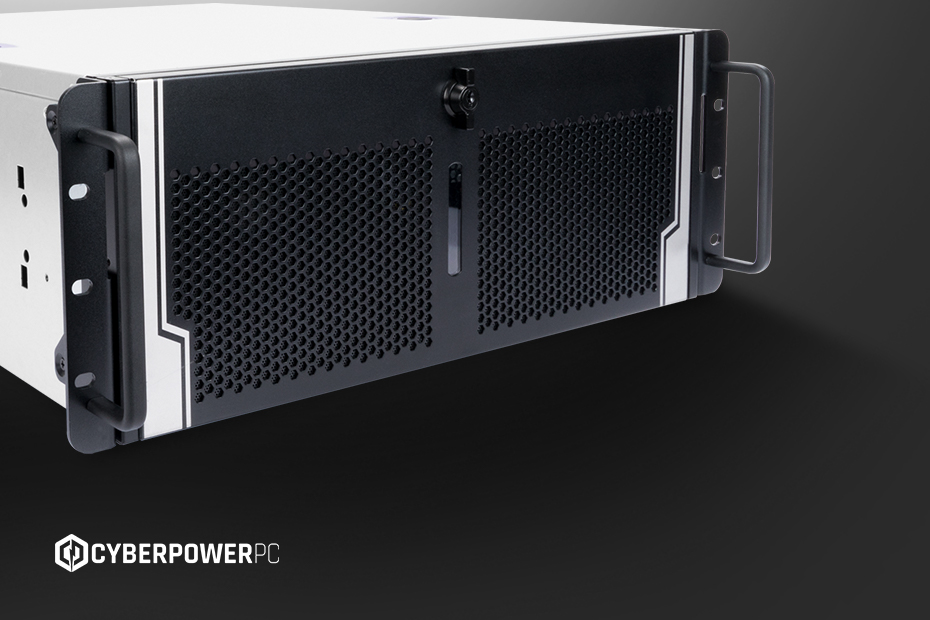
An AI GPU server is a computer system built around one or more powerful graphics processing units (GPUs) that are designed to handle artificial intelligence workloads. Unlike a standard gaming PC, which typically contains a single graphics card, an AI server may feature multiple high-performance GPUs working together to process large amounts of data simultaneously.
These systems are commonly used for:
- Machine learning
- AI model training
- Generative AI applications
- Data analysis
- Scientific computing
- 3D rendering
At first glance, that might not sound particularly relevant to gaming. However, the same GPU technology used for AI workloads is often based on the same architecture powering modern gaming graphics cards. In fact, many of the AI features gamers use every day rely on technology originally developed for AI processing.
What do AI servers have to do with PC gaming?
The average gaming PC doesn’t need an AI server to run modern games. A powerful desktop GPU is more than capable of handling gaming workloads on its own. However, AI servers can support gaming-related activities in several ways.
One of the most obvious examples is content creation. Many gamers now stream, edit videos, create thumbnails, generate artwork, or produce social media content alongside their gaming hobby. AI servers can accelerate these tasks dramatically. Large AI models used for image generation, video editing, voice processing, and automated content creation often require significantly more computing power than a typical gaming PC can provide.
AI servers can also be used for game development. Developers increasingly use AI tools to generate assets, create dialogue systems, test gameplay mechanics, and assist with coding. Even players themselves are beginning to experiment with AI-powered mods, custom NPCs, and locally hosted AI assistants that enhance gaming experiences.
AI features already used in gaming
Even if you’ve never touched an AI server, you’re probably already benefiting from AI technology while gaming.
One of the best examples is NVIDIA DLSS. Deep Learning Super Sampling uses AI models to upscale lower-resolution images, delivering higher frame rates while maintaining visual quality. AMD’s FSR and Intel’s XeSS use similar concepts to improve performance in demanding games.
Ray reconstruction, frame generation, and AI-powered image enhancement are becoming increasingly common in modern titles. These technologies rely on the same underlying principles that power larger AI workloads. As games continue to evolve, AI hardware is likely to become even more important.
You can find out more about AI in gaming by reading our guide.
Do I need an AI GPU server?
For most gamers, the honest answer is no — at least not yet. If your main goal is playing games at high frame rates, you’re generally better off investing in a powerful gaming PC rather than a dedicated AI server.
A gaming-focused system with a modern graphics card such as an NVIDIA GeForce RTX 5080 or RTX 5090 will deliver far better value than purchasing server hardware that isn’t designed primarily for gaming. Where AI servers become interesting is when gaming overlaps with other demanding activities.
For example, if you’re a streamer running AI-powered video editing tools, generating content using large language models, experimenting with local AI image generation, or developing games, an AI server may provide benefits that a traditional gaming PC cannot. In these situations, the server becomes less about gaming itself and more about supporting the wider ecosystem around gaming.
Local AI vs Cloud AI
Before investing in expensive hardware, it’s worth considering whether you actually need a physical AI server at all. Today, many AI tools operate in the cloud. Services like image generators, coding assistants, and AI chatbots often run on remote servers maintained by major technology companies. This means gamers can access powerful AI tools without purchasing specialised hardware.
However, some users prefer local AI solutions because they offer:
- Greater privacy
- Faster access to models
- No subscription fees
- Full control over data
- Offline functionality
For these users, an AI GPU server can act as a personal AI powerhouse.
What makes a good AI GPU server?
A well-designed AI server prioritises stability and sustained performance rather than the short bursts of activity common in gaming. When evaluating AI servers, GPU performance is the most important factor. AI workloads depend heavily on graphics processing power, memory capacity, and bandwidth.
Unlike gaming, where clock speeds and frame rates dominate discussions, AI applications often benefit from large amounts of VRAM. This allows models to load more data directly into memory and process larger tasks without relying on slower system resources.
CPU performance still matters, but it usually plays a supporting role compared to GPUs. Storage is another consideration, as AI projects can involve enormous datasets and model files, making fast NVMe SSDs almost essential. Cooling is equally important. AI workloads often push hardware to maximum utilisation for extended periods, generating substantial heat.
Best GPU servers for AI gaming
NVIDIA DGX Systems
NVIDIA’s DGX range represents the gold standard of AI infrastructure. These systems are designed specifically for machine learning, AI research, and enterprise-scale workloads. They deliver extraordinary performance but come with equally extraordinary price tags that place them well beyond the reach of most gamers.
For gaming-related tasks, they’re generally excessive unless you’re running professional AI projects alongside development work.
Multi-GPU Workstations
For enthusiasts and creators, a custom-built workstation often makes more sense. A system equipped with multiple high-end NVIDIA RTX GPUs can deliver impressive AI performance while retaining flexibility for gaming, rendering, and content creation. These machines occupy a middle ground between consumer gaming PCs and enterprise AI servers.
For many creators, this is the sweet spot.
Single-GPU AI Systems
Many modern GPUs are surprisingly capable AI accelerators on their own. Cards such as the NVIDIA GeForce RTX 5090, RTX 5080, or professional RTX workstation GPUs can run local AI models while also serving as exceptional gaming hardware.
For most gamers interested in AI, a powerful single-GPU system offers the best balance of cost, performance, and practicality.
AI Servers for Streamers and Content Creators
This is arguably where AI servers make the most sense for gaming audiences. Modern content creation increasingly relies on AI tools:
- Video editors for automated clipping, subtitles, background removal, and audio cleanup.
- Streamers for AI-powered moderation, chat assistants, and voice processing.
Thumbnail creation, image generation, script writing, and content planning can all be accelerated using AI models. As a result, creators often gain more value from AI hardware than gamers focused solely on gameplay.
The future of AI gaming
AI is already transforming how games look and perform, but we’re still in the early stages. Future games may feature NPCs capable of natural conversations, worlds that dynamically adapt to player behaviour, and AI-generated content that changes with every playthrough.
Cloud-based AI systems could eventually handle tasks too demanding for consumer hardware, while local AI processing may become increasingly integrated into gaming PCs. As GPUs continue to evolve, the gap between gaming hardware and AI hardware is likely to shrink. Many of the graphics cards gamers buy today are already capable AI processors in their own right.
Are AI GPU Servers Worth It?
For most gamers, an AI server is probably overkill. The money required to build or purchase a dedicated AI system would often be better spent on a faster gaming GPU, a higher refresh rate monitor, or additional storage. However, if gaming is only part of your workflow, the equation changes.
Content creators, streamers, game developers, and AI enthusiasts may find significant value in hardware capable of handling both gaming and advanced AI workloads. In many cases, a high-end gaming PC with a powerful modern GPU will provide the best of both worlds.
As AI becomes increasingly integrated into games and gaming-related workflows, understanding the role of GPU servers is becoming more relevant than ever.
If you’re looking to maximise FPS in the latest releases, a dedicated AI server isn’t necessary. A powerful gaming PC remains the best option. But if you’re using AI tools alongside gaming, whether for streaming, content creation, game development, or experimentation with local AI models, servers can unlock capabilities that go far beyond traditional gaming hardware.